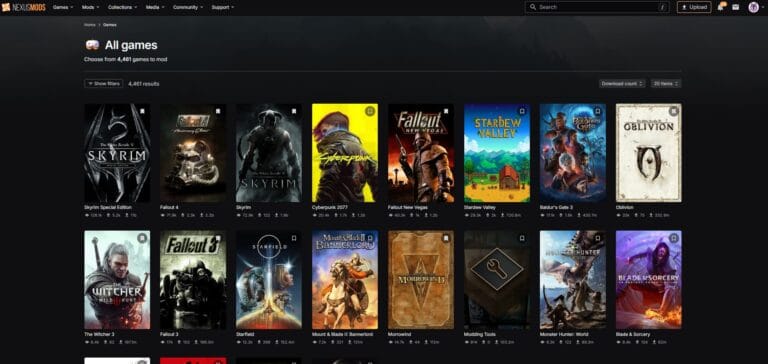
For decades, the modding community has been the unsung hero of the PC gaming ecosystem. What started with hobbyists tweaking code on floppy disks has evolved into a massive creative force that keeps games alive for years after release. The vast majority of this work is given away freely—a gift from the most dedicated fans to the community. However, the landscape is shifting. With the introduction of paid mod platforms by major studios like Bethesda, the rise of crowdfunding behind paywalls on sites like Patreon, and the 2023 launch of Bethesda’s “Creations” system, the question of whether mods should be sold has become one of the most divisive topics in gaming.
I will not mince words: I do not support paywalled mods. While I understand the desire for mod authors to recoup time and effort—and fully support voluntary donations, “Buy Me a Coffee” tips, or even a “premium” tier that offers alternatively access to a free, basic-featured version—the direct sale of mods is a dangerous path for the community. To understand why, we must examine the ethical, legal, and practical arguments against this model, as well as acknowledge the arguments in its favor.
The Case Against Paywalls
Legal Quicksand: DMCA, Lawsuits, and Precarious Foundations
One of the biggest risks of paid mods is that they operate in a legal gray area that can disappear the moment a publisher decides to act. Modding is generally considered legal as a form of fair use when it is non-commercial. However, the moment money changes hands, the mod ceases to be a fan project and becomes a commercial enterprise built on someone else’s intellectual property.
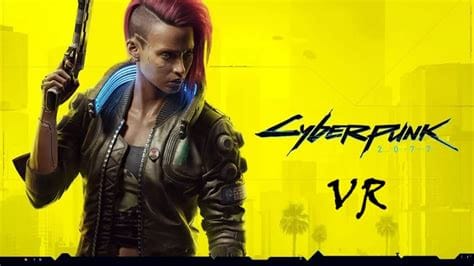
We saw this play out dramatically in late 2025 with creator Luke Ross. Ross had been charging a monthly $10 subscription on Patreon for a VR mod that allowed users to play Cyberpunk 2077 in virtual reality. Despite the mod’s popularity and Ross’s argument that it sold copies of the game for CD Projekt Red, the publisher issued a DMCA takedown. Ross was forced to remove the mod immediately because it violated the studio’s fan guidelines regarding commercial use—even though the mod creator argued his work didn’t copy any game assets directly. This wasn’t an isolated incident; Take-Two Interactive did the same to Ross’s GTA and Red Dead Redemption mods in 2022. The lesson is clear: a paid mod can be shut down instantly, and all the money spent by consumers vanishes with it.

Third-party IP is a particular minefield. Because mods have historically been made without money involved, the community has long had a culture of using copyrighted material freely—music, characters, art—without consequence. The moment money enters the equation, those same liberties become potential lawsuits. A platform hosting paid mods that contain unlicensed material could face direct legal exposure.
A troubling legal precedent is forming. In June 2025, Daybreak Games—owners of EverQuest—filed a copyright lawsuit against the operators of a game emulator specifically because it was paid, while similar free emulators had been tolerated for years. Daybreak obtained an injunction pulling the emulator down entirely. The message could not be clearer: free = tolerated, paid = targeted.

Studios can also use Terms of Service as a weapon. In the 1998 case Micro Star v. FormGen, courts granted publisher FormGen an injunction against a company that packaged and sold user-made levels for Duke Nukem 3D—because the game’s license explicitly required player-made levels to be offered for free. Many modern games have similar clauses buried in their ToS, waiting to be enforced.
Asset Theft and the Free Mod Ecosystem Parasitism Problem
This is one of the most ethically troubling issues in the paid mods debate. When paid mods first launched on Steam in 2015, a common pattern emerged: paid mods appearing on the store contained components taken from free mods or mods on Nexus, uploaded by creators who had no right to sell those components.
One high-profile case involved modder Chesko, who included an animation system made by another creator—already available for free—inside his own paid mod. This led to enormous controversy and eventually drove him to attempt to remove his work entirely, stating the backlash had left him “beyond worn-down.”

The deeper problem here is structural: paid mod authors often build on the shoulders of a free, collaborative ecosystem—free assets, free frameworks, free tools built by the community over decades—and then extract profit from that commons without contributing back. That is fundamentally against the spirit of modding as it has existed for generations.
The Fragile Ecosystem: Abandonment and Support
When you buy a mod, you are buying a product with no warranty. Mods can be buggy, and they break whenever the base game updates. In the free ecosystem, the community accepts this; authors fix bugs when they can, and users are grateful. But in a paid environment, the dynamic changes. As noted in discussions within communities like ARK: Survival Evolved, paid mods introduce the expectation of customer support, updates, and compatibility fixes. If a modder decides to move on, players are left with broken, unusable content they paid for.
Three concrete problems arise with paid mods: stolen assets being sold as original work, buggy or broken mods being sold without adequate quality control, and mods that worked fine but then broke on a game update and were never fixed by their now-financially-motivated authors. When something is free and a labor of love, the community maintains it. When it’s commercial, it can be abandoned the moment it stops being profitable.
Furthermore, the social safety net of the community—where other users step in to offer workarounds or unofficial patches—might erode entirely if modding becomes a pay-to-play environment. Why help someone for free if they are selling their work?
The Server Barrier: Fragmenting the Player Base
Paid mods create a technical and social barrier that free mods do not. In games like ARK, unofficial servers are the lifeblood of the community. However, if a server owner wants to use a premium mod, every single player who joins must purchase that mod to connect. This creates a “hard gate” that kills server populations. One server administrator reported their active user count dropping from over 200 to less than 15 immediately after introducing premium mods, as players refused to pay just to play on a specific server with their friends.
Critics argue more broadly that paid mods fragment the modding community by restricting access to content based on ability to pay. This creates a two-tier modding world that goes against the historically egalitarian culture where anyone with the game could access everything the community had made.
When Valve’s original paid mod system was active in 2015, it split the modding community, caused many modders to hide their work, and pushed some toward selling low-quality mods quickly for fast profit.
Predatory Platforms and Unfair Revenue Splits
When publishers push for paid mods, they often claim it is “for the modders.” In reality, it is usually about getting a cut of the revenue. During the 2015 Steam paid mods experiment, mod creators received only 25% of the revenue from their own work, with Valve and Bethesda taking the lion’s share—leaving many feeling the system was designed primarily to benefit the platforms rather than the creators it claimed to empower.
Platforms like Bethesda’s Creation Club (later replaced by “Creations” in 2023) or the systems set up in ARK: Survival Ascended are designed to take a percentage of every sale. Critics argue that this transforms modding from a community-driven passion into a microtransaction storefront. As one forum user put it, publishers “don’t care about quality, they don’t care about bugs, they don’t care about completeness, they only care about getting their cut.”
Bethesda’s Creations System: A Case Study in What Goes Wrong
Bethesda’s history with paid mods reads like a cautionary tale. In 2015, Valve and Bethesda’s first attempt at paid mods on Steam was reversed after just one week, with Bethesda issuing a public apology and offering refunds. Their second attempt, the Creation Club in 2017, still generated enough backlash that some players filed a class-action lawsuit.
In 2023, Bethesda replaced Creation Club with “Creations,” a new system for hosting both free and paid mods. Reception was widely negative, with criticisms centered on pricing, harm to the community, and the practice of abandoning free mods in favor of pushing paid updated versions.
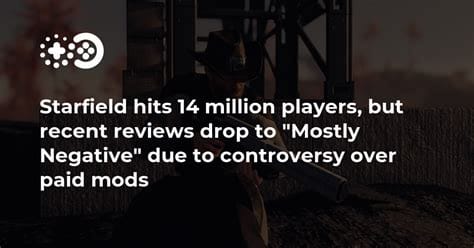
The addition of paid quest content (the “Tracker’s Alliance”) to Starfield‘s Creations system was seen as undercutting Bethesda’s own argument that the platform benefits modders—since it appeared the studio was primarily interested in nickel-and-diming players for underwhelming content.
It Lets Studios Off the Hook
The case of TemplarGFX’s overhaul mod for Aliens: Colonial Marines perfectly illustrates this trap. The modder essentially fixed a broken, widely-panned game that had even been the subject of a class-action lawsuit—yet Gearbox and Sega continue to benefit from new sales of the game, while the modder who did the repair work earns nothing from those purchases.

In a world of normalized paid mods, studios could theoretically ship a half-finished product knowing the community will patch it—and then charge players again for the fix. Paid mods also reduce pressure on developers to deliver complete, polished games at launch. If content gaps can be monetized through a curated mod store, there’s a financial incentive to leave those gaps open.
The Exploitation of the Commons
The most profound argument against paid mods is a moral one. Modders stand on the shoulders of giants. They use tools provided by the developers, and they often borrow code, assets, or ideas from other free mods. The “spirit of modding” has always been about sharing improvements freely to make the game better for everyone. When an individual puts a mod behind a paywall, they are effectively privatizing an enhancement to a community space. They are profiting from the ecosystem that the free community built, without giving back to that ecosystem in the same currency.
Modding was always perceived as a labor of love, a gift to the community rather than a commercial product. Introducing money risks encouraging greed over quality and clashes with the ethos that made the modding community great in the first place. Modders typically work on games after their day jobs, purely for the love of the project. If financial motivation becomes the primary driver, those who don’t find it profitable will leave—and those who stay may be doing it for different reasons than the community values.
The “Sims 4” Problem: Permanent Paywalls
Sometimes, the “temporary” paywall becomes permanent. EA’s guidelines for The Sims 4 state that paid mods should eventually become free after a “reasonable amount of time.” Yet, as of 2025, players continue to complain that many mod authors keep their content behind permanent paywalls for months or years, violating the terms of service with no consequences from EA. This creates a two-tiered community where those who can pay get access to content, and those who cannot are left out entirely.
The Sour Grapes of Publishers
There is also a bitter irony in the stance of some publishers. When modders like Luke Ross fill a gap the industry has ignored—such as adding VR to AAA titles—and try to monetize that labor, publishers shut them down. Yet, those same publishers have no plans to create that content themselves. This leaves the consumer with nothing. As Ross lamented, it feels like “iron corporate logic,” where companies maximize profit while expecting fans to work for free, even when the mod adds value to the publisher’s own product.
The Pros: What the Other Side Argues
To be fair, the argument for paid mods isn’t without merit. Proponents usually cite the following:
Compensation for Serious Work: Large-scale mods—total conversions, new questlines, entire new areas—can represent hundreds or thousands of hours of professional-grade work. Charging a fee allows authors to treat modding as a job rather than a hobby, potentially leading to higher quality and more ambitious projects. A purely donation-based model rarely compensates that adequately, as even top modders report that donations rarely amount to much, and most players simply never hit the donate button.
Sustainability: Donations are inconsistent and unpredictable. A direct payment model can provide stable income that funds ongoing development, support, and compatibility updates.
Reducing Entitlement: Some developers argue that a nominal fee filters out users who don’t read documentation or make unreasonable demands, as they are more cautious when spending money.
Filling a Gap: As seen with the VR mods, paid mods can provide experiences the industry refuses to make, catering to niche audiences willing to pay for that specific feature.
A Path to the Industry: Historically, selling or monetizing a mod has been a legitimate entry point into game development. Garry Newman’s Garry’s Mod is the most famous example—a mod that became a paid, standalone game and launched an entire studio.
Console Accessibility: Curated paid mod systems like Bethesda’s Creation Club do bring mod-adjacent content to console players who otherwise have no access to the PC modding ecosystem at all.
Conclusion: Protecting the Commons
While I respect the desire of mod authors to be paid for their tremendous work, the paid mod model represents a Faustian bargain for the community. It invites legal action from publishers, creates barriers between players, enables asset theft, fragments the player base, and commodities a space that has thrived for decades on generosity and collaboration.
The ideal middle ground—which I fully support—is the donation/tip model, or the “paid early access, free later” model. This allows authors to be rewarded for their labor while ensuring that the modding commons remain open and accessible to all. Patreon, “Buy Me a Coffee,” and similar platforms already provide mechanisms for fans to support creators voluntarily without erecting permanent barriers.
As consumers, we must be careful what we pay for. If we normalize paying for mods, we may soon find ourselves paying for everything—while receiving none of the community spirit that made modding great. The moment we treat mods as products to be bought and sold rather than gifts to be shared, we risk losing the very thing that has kept our favorite games alive for decades: a community united by passion, not divided by paywalls.
by Takoda Wahya
Kindness IS a Superpower
What are your thoughts on paid mods? Have you ever paid for a mod, or do you strictly stick to free community content? Let me know in the comments below.